%run _help_reading.pyimport pandas as pddf = pd.read_csv('https://github.com/MrGeislinger/victorsothervector/raw/main/''data/reading/all_reading-clean.csv')book_name ="""Blueprints for Text Analysis Using Python"""one_title = one_title_data(df, book_name)one_title_summary = get_summary_by_day(one_title)generate_plot(one_title_summary, book_name);
/Users/victor/Developer/Workspace/victorsothervector/books/_help_reading.py:78: UserWarning: set_ticklabels() should only be used with a fixed number of ticks, i.e. after set_ticks() or using a FixedLocator. Otherwise, ticks may be mislabeled.
  ax.set_xticklabels(
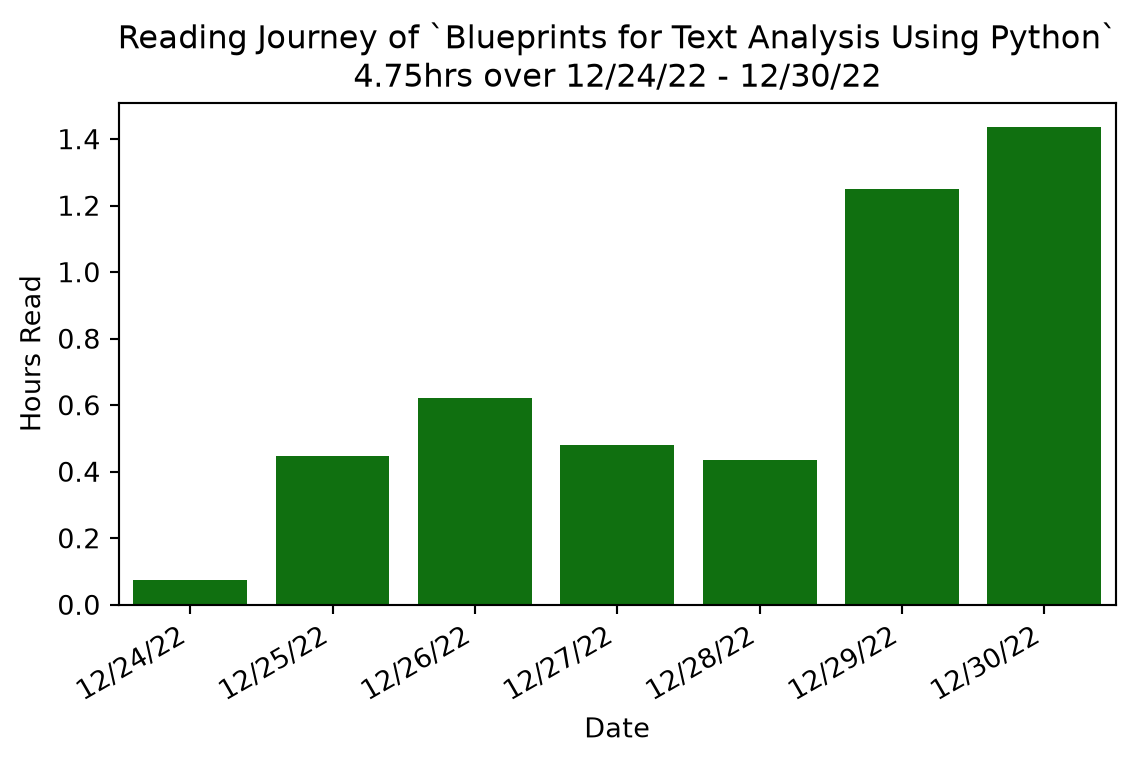
Figure 1: Reading done for Blueprints for Text Analysis Using Python
title: “Blueprints for Text Analysis Using Python” book: title: “Blueprints for Text Analysis Using Python” format: html: code-fold: true creator: “@victorgeislinger” —
Thoughts on Blueprints for Text Analysis Using Python
Overview
Turning text into valuable information is essential for businesses looking to gain a competitive advantage. With recent improvements in natural language processing (NLP), users now have many options for solving complex challenges. But it’s not always clear which NLP tools or libraries would work for a business’s needs, or which techniques you should use and in what order. This practical book provides data scientists and developers with blueprints for best practice solutions to common tasks in text analytics and natural language processing. Authors Jens Albrecht, Sidharth Ramachandran, and Christian Winkler provide real-world case studies and detailed code examples in Python to help you get started quickly. Extract data from APIs and web pages Prepare textual data for statistical analysis and machine learning Use machine learning for classification, topic modeling, and summarization Explain AI models and classification results Explore and visualize semantic similarities with word embeddings Identify customer sentiment in product reviews Create a knowledge graph based on named entities and their relations